Diabetes, stress, and depression don't mix well.

1 • Effects of stress on the body
Stress is an innate reaction to protect us from potential dangers posed by changes. In just a few microseconds, our brain's alarm centre assesses whether to fight, flee, or freeze: FIGHT FLIGHT FREEZE
Acute stress activates adrenaline (produced by the adrenal glands) which makes it possible to:
- reduce blood sugar levels so as to be able to use all the necessary energy,
- send blood to the muscles so as to be ready to run or fight,
- maintain a state of hyper-vigilance for even the slightest stimulus.
This adrenaline surge enables the body to multiply its mental and physical strength. However, this is a highly energy-intensive state, both physiologically and psychologically, with a significant risk of exhaustion.
When stress becomes chronic, the activation of adrenaline gradually shifts to cortisol (produced by the adrenal glands) if no adaptive strategy is effectively employed. Cortisol can lead to various pathologies, such as:
- Metabolic disorders: Cortisol stimulates glucose production in the liver to cope with stress. Blood sugar levels can increase if the insulin available is not sufficient. Cortisol can also reduce the sensitivity of cells to insulin, potentially causing insulin resistance and diabetes. Here, cortisol stimulates appetite, which can lead to significant weight gain.
- Sleep disorders: Cortisol regulates the circadian rhythm (sleep timing). Poor sleep quality or duration can affect mood (anxiety, depression, etc.).
2 • Depression and diabete
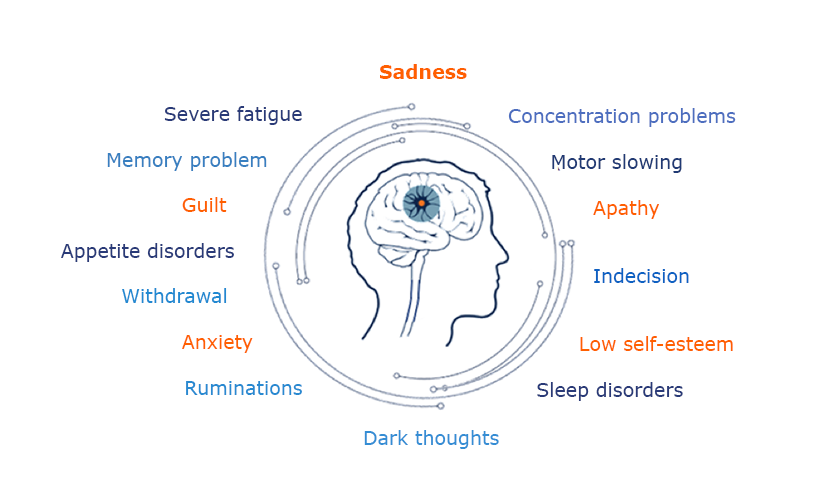
Depression can increase the risk of diabetes:
Patients suffering from depression are 1.6 times more likely to develop type 2 diabetes than those without depression.
This can be due to their lifestyle habits:
A person suffering from depression is less likely to maintain a healthy lifestyle (diet low in fruits and vegetables but high in fats and sugars, lack of physical activity…) and may neglect or even abandon his or her treatment, entailing a serious health risk.
Figure 1 • Potential mechanisms of the link between depression and type 2 diabetes
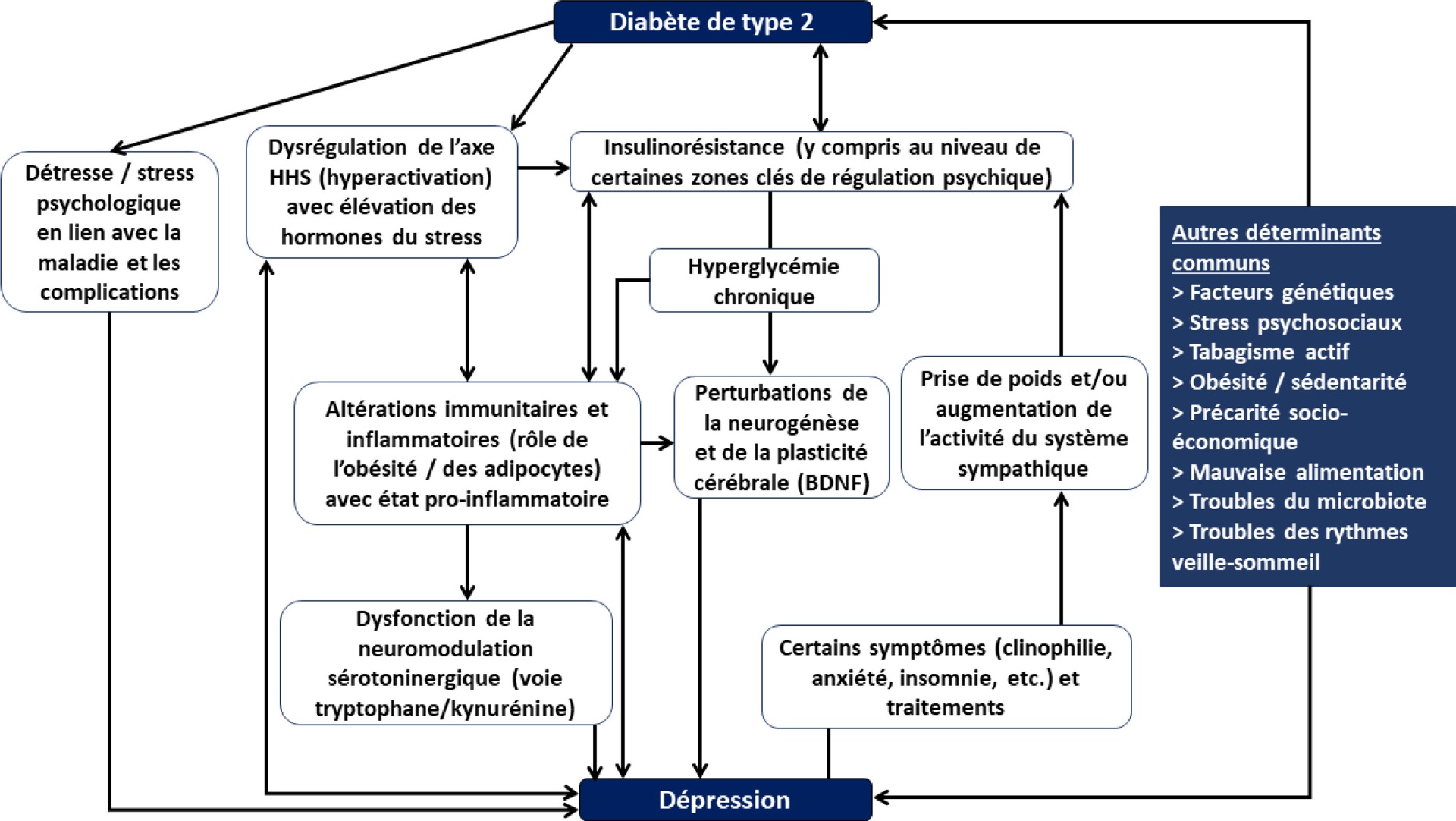
Cf. Chauvet,J-C. et al. (2024). Mise au point sur les liens entre diabète et dépression, Médecine des Maladies Métaboliques. ScienceDirect, 18(3), 204-213.
Diabetes can increase the risk of depression:
The risk of developing depression is two to three times higher in diabetic patients compared with non-diabetic individuals. Depression increases the presence of risk factors for various complications (neuropathy, nephropathy, retinopathy, etc.).
Depression in a diabetic person can arise as of diagnosis, when complications appear, or due to the significant demands of treatment and care.
Figure 2 • Potential mechanisms of the link between depression and type 1 diabetes

Cf. Chauvet,J-C. et al. (2024). Mise au point sur les liens entre diabète et dépression, Médecine des Maladies Métaboliques. ScienceDirect, 18(3), 204-213.
3 • Regulating stress
| Stress | Relaxation |
| Innate | To be acquired / Learned |
| Genetically programmed / Cannot be unlearned | To be practised regularly, whence the risk of forgetting |
| Immediate: rapid action | Voluntary work with continuous effort |
| Is activated and maintained effortlessly | Benefits are built over time, with long-term positive effects |
Stress curves of a person practising relaxation
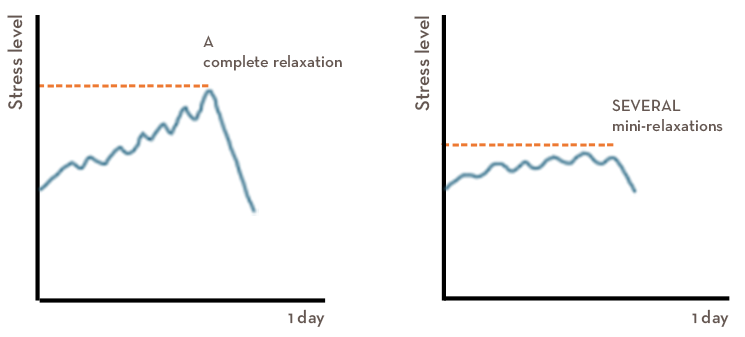
By the end of the day in both cases: Stress level dropped significantly.
Advantage of mini-relaxations: stress level never very high
- Relaxation, sophrology, meditation…
- Breathing, cardiac coherence, yoga…
- Mindfulness
4 • Cultivating the joy of living
“I’ve decided to be happy because it’s good for my health” Voltaire (apocryphal)
- What activities make me feel good?
- What relationships bring me joy?
- What thoughts benefit me? Who or what inspires me?
- How do I stay grounded in the present (stopping ruminations and daydreaming)?
Identify and strengthen your resources.
Develop your resilience…
protective factors
|
Life satisfaction |
Positive affects |
Self-efficacy |
Soutien social |
|
Self-esteem |
Flexible, adaptive coping style |
Gratitude |